
[interactive_buttons]
Konkan Railway History: The Engineering Marvel That Changed India’s West Coast
Site: backup.train360.co.in/ › konkan-railway-history
The Konkan Railway is more than just a rail line. It’s a tale of vision, determination, and engineering that succeeded in some of India’s most difficult landscapes. Connecting the western coastal belt from Roha (Maharashtra) to Thokur (near Mangalore, Karnataka), the Konkan Railway changed travel, trade, and tourism in Maharashtra, Goa, and Karnataka when it fully opened in the late 1990s.
Quick Snapshot | konkan railway history (At a Glance)
- Length: 756.25 km (Roha to Thokur)
- Opened (Full Route): 26 January 1998
- Major Features: Around 2,000 bridges and 92 tunnels
- Operator: Konkan Railway Corporation Ltd (KRCL), established in 1990
Why the Konkan Railway Was Needed: The Background
Before the Konkan Railway, the western coastal areas of Maharashtra, Goa, and coastal Karnataka had poor rail connections. Trains traveling between Mumbai and Mangalore had to take long inland routes, which added hours to travel time. The region’s valuable resources, ports, and population centers were not connected directly. Surveys began in the 1920s, but the project really gained traction after India gained independence.
The plan was to build a direct coastal line through the Western Ghats, which is one of the toughest terrains in India. The aim was not just better transportation but also regional growth and unity. The Konkan Railway became an essential economic lifeline for millions living along the Konkan coast.
The Plan and Formation of KRCL
Understanding the project’s complexity, which included tunnels, bridges, and unstable coastal land, the Government of India decided to create a new public-sector company, Konkan Railway Corporation Ltd (KRCL), in 1990. This setup enabled quicker decision-making, more accessible funding, and flexible hiring of contractors with specific engineering skills.
Construction: A Story of Grit and Innovation
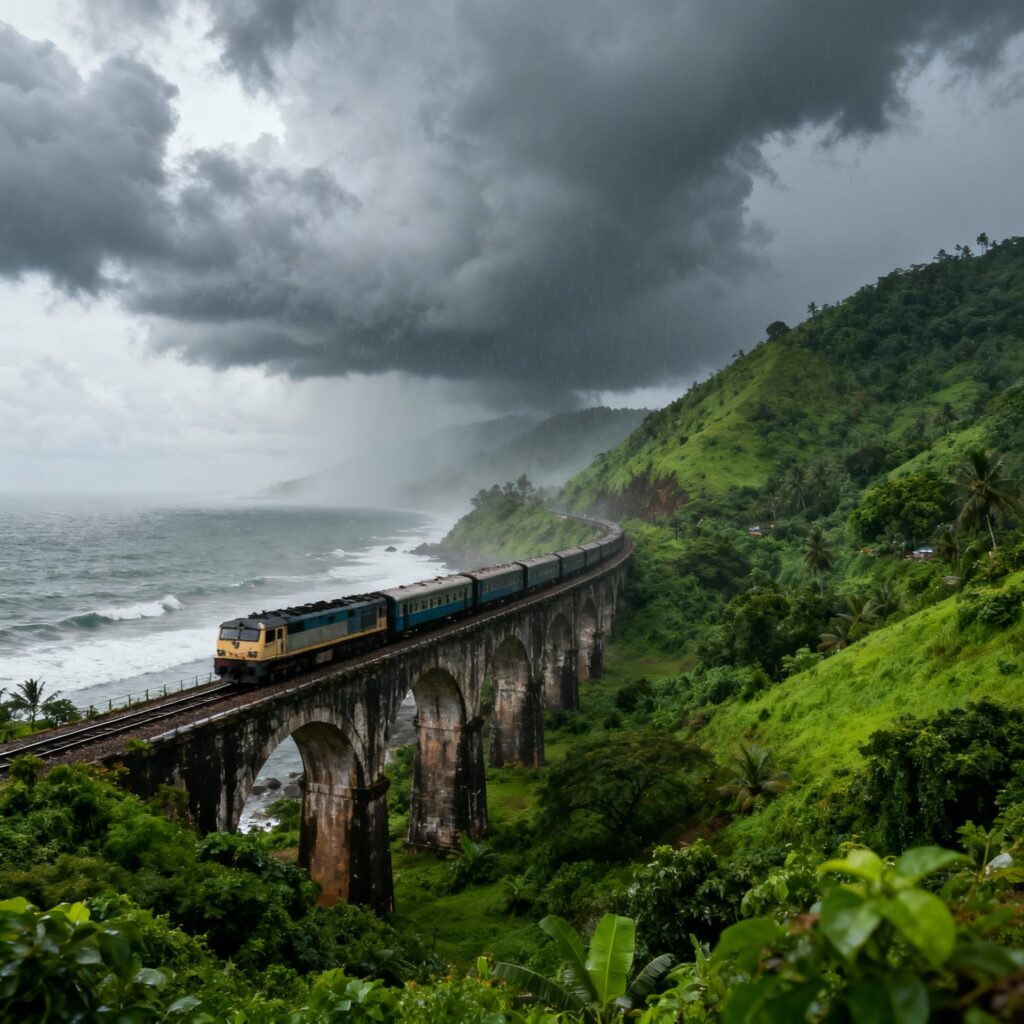
Building the Konkan Railway was an engineering task that demanded remarkable persistence. The line cuts through mountains, deep valleys, and dense forests that face heavy rains and landslides.
- Bridges & Viaducts: Nearly 2,000 bridges of various lengths were built across rivers, estuaries, and valleys.
- Tunnels: About 92 tunnels were drilled through the Western Ghats, some in very soft soil that needed manual excavation.
- Human Effort: Thousands of engineers and workers worked under tough conditions. Many lives were lost, and work had to be repeated several times because of collapses and floods.
Major Indian construction companies such as Larsen & Toubro, Gammon India, and Afcons contributed significantly to the project, using innovative bridge-launching and tunnel-lining techniques.
Phased Commissioning: How the Line Came Alive
Construction was done in sections. The southern section (Mangalore–Udupi) opened first in 1993, followed by the northern segments until the complete Roha–Thokur line started operating on 26 January 1998.
This phased execution allowed people to start benefiting early, enhancing connectivity and boosting trade and tourism even before the project was fully finished.
Major Engineering Highlights
- High Density of Bridges and Tunnels: A record number of structures in a single project, tailored to varied geography.
- Longest Tunnel: The Karbude Tunnel near Ratnagiri is one of India’s longest rail tunnels.
- Soft-Soil Tunneling: Some tunnels needed manual excavation because of fragile, waterlogged soil — a major engineering achievement.
Impact: Economy, Travel, Tourism, and Integration
The Konkan Railway has changed the socio-economic landscape of India’s west coast:
- Reduced Travel Time: A direct route cut down Mumbai–Mangalore travel time by several hours.
- Trade & Logistics: Improved access for ports and industries led to new business options and coastal freight movement.
- Tourism Boost: The scenic route attracted domestic and international tourists to Goa and Konkan.
It also strengthened emotional and cultural ties between communities across Maharashtra, Goa, and Karnataka.
Safety, Innovation, and Modernization
The early years faced landslides and safety issues due to the region’s delicate terrain. KRCL implemented pioneering steps like slope stabilization, anti-collision devices, and remote monitoring. Electrification and double-tracking in busy sections have been planned or carried out gradually.
Konkan Railway Today and Its Future
Today, the Konkan Railway is an essential coastal corridor for passengers and freight across three states. KRCL continues to extend its routes, introduce new train services, and improve Ro-Ro freight systems to reduce highway congestion.
With ongoing upgrades, financial adjustments, and digital advancements, the Konkan Railway remains one of India’s most successful infrastructure stories.
Further Reading
Conclusion
The Konkan Railway is a living testament to India’s determination and engineering excellence. It has connected remote coastal towns and opened new trade and tourism paths, changing the future of the Konkan region forever.

Pingback: Nilgiri Mountain Railway History – Heritage Train Journey in Tamil Nadu | Train360 - Train360°
Pingback: Mantua Trains History: A Journey Through Time - Train360°
Pingback: IRCTC Log In – Complete Step-by-Step Guide for 2025 | Train360.co.in - Train360°
Pingback: Sealdah Railway Station Guide: Photos, Distance, Hotels & Travel Info (2025-26) - Train360°
Pingback: Kalka Shimla Railway History: The Story of India’s Most Scenic Mountain Train - Train360°
Pingback: Top Railway History Questions You Must Know – From India’s First Train to Modern High-Speed Rails - Train360°
Pingback: Trains News Today: Latest Indian Railways Updates (Cyclone Montha, Train Cancellations & Safety Alerts) - Train360°
Pingback: Jio Google Gemini Youth Offer – Get Free Google Gemini Pro Plan Worth ₹35,100 for 18 Months | Jio 5G Youth Offer 2025 - Train360°
Pingback: IRCTC Tatkal Automation Tool: Smart Way to Book Confirmed Train Tickets Fast in 2025 - Train360°
Pingback: Heritage Train in India List 2025: Explore India’s Royal Rail Journeys & Ticket Prices - Train360°
Pingback: Railway Food Price List 2025-26 (Updated): IRCTC Menu, Standard Meal Rates & What to Expect on Trains - Train360°